

Interview with Company Founder Opitz
In 1964, Dieter Opitz took a bold step and founded Dieter Opitz Garten- und Landschaftsbau, a company that has evolved over the decades into a major player in the tree industry.
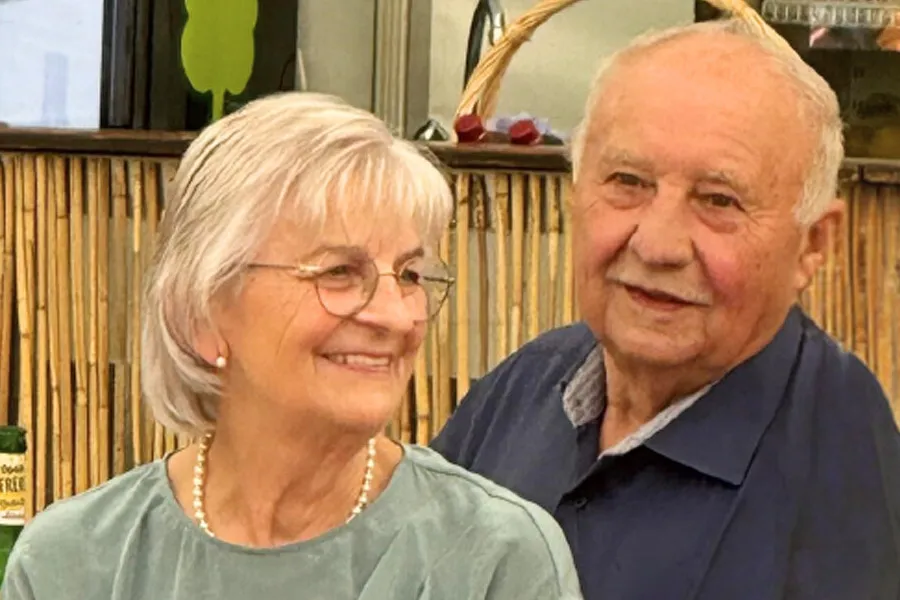
In this interview, we learn from the company founder and his wife, Helga Opitz, about the company's history, its challenges, and its successes.
Mr Opitz, how did the idea for founding the company come about?
Dieter Opitz (DO): Originally, I was supposed to take over my grandfather's farm in Silesia. We specialised in cucumber cultivation. Things turned out differently, and I trained as a gardener at the Wiesentheid palace gardens, where my great interest in trees first took root.
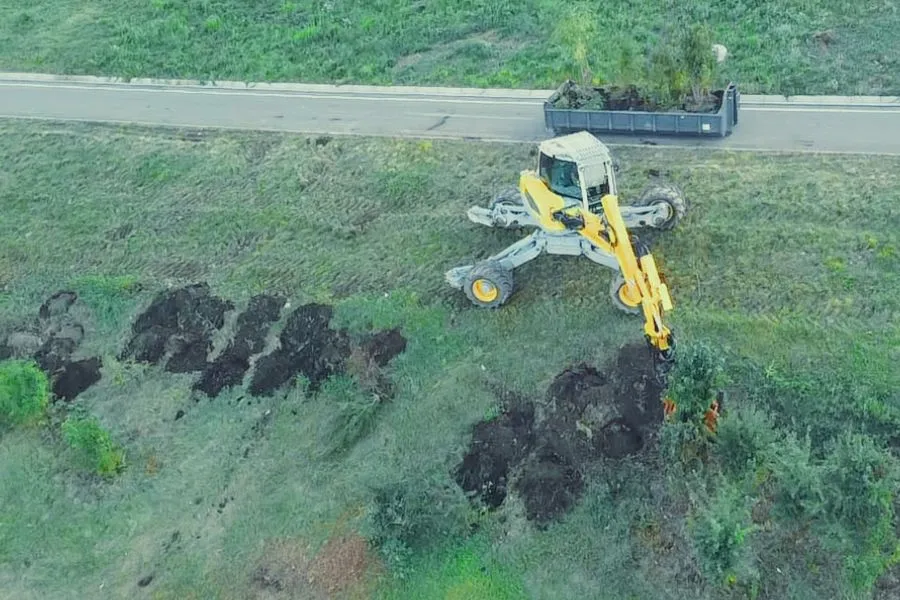
From there, I moved on to Nuremberg, where I completed further training as a landscape gardener at Oliver von Delius Gartengestaltung KG. That was when the idea was born to start my first company in 1964. After founding it, I went on to complete my master craftsman's examination in Heidelberg. During my absence, my wife Helga ran the company. She had been responsible for the commercial side of the business since our wedding. Beyond trees, development and technology were my passions. In the USA, I saw machines that could move large trees, and I was certain that it could be done even better and on a larger scale.
What were the biggest challenges in the early years?
Helga Opitz (HO): As landscapers, we had to earn our money in the summer because we had no orders in the winter. DO: The biggest challenge was my father's rule: "Your company must not go into debt!" So, I kept working in my garage after hours and developed the first tree spade in 1971, built from scrap yard parts, to avoid going into the red.
Was there a specific moment or event that brought the breakthrough for the company?
HO: Moving away from general landscaping toward tree moving. For one thing, it’s a year-round business, and for another, it was completely new. To put it bluntly, we had already made our business for the year by spring, just when the average landscaper was starting their work. But the whole thing had to be a success, otherwise, it would have been our financial ruin. The development was very expensive.
DO: There were many such events, though they presented us with further challenges. For example, the trees kept getting bigger. In 1977, I founded my own manufacturing company, Optimal-Vertrieb Opitz GmbH. There, in 1981, we developed the OPTIMAL 3000 tree spade. Even the Minister of Housing, Dieter Haag, came to Heideck for the christening at the time.
HO: Membership in the DGG, the cooperation with a Swiss specialist firm for tree moving, and the later hiring of a sales representative are just three more of dozens of milestones that led to our breakthrough. We travelled a great deal; landscape gardeners weren't familiar with tree moving. We handled the moving, and the local company handled the auxiliary work and maintenance.
What has changed over the years?
DO: In the 70s, tree moving was a new concept. No one knew what was possible. Some even called me crazy, saying you can't transplant old trees. HO: We gained experience year after year, which led us to place great importance on aftercare and maintenance. Together with the DGG, we developed the "Umwelt Aktuell" publication, maintenance manuals, tender specifications, the creation of rehabilitation zones, and more. The "green" mindset has grown—even among young people—thankfully.
DO: Watering the relocated trees is also incredibly important. Back then, I was sometimes ridiculed for it. If we didn't get the contract for watering afterwards, some trees would suffer. Most people think trees grow on their own—they don't! Relocated trees require special care. The value of a large, old tree is rising, and the fact that a large tree is valuable is now widely recognised and accepted in many areas.
Which principles and values were important to you from the very beginning?
DO: I always tried to improve the technology, make the work easier, and pass that knowledge on. HO: Of course, it wasn't just about technical values. When it came to our employees, the rule was: if our staff is working, we are working too, so we were right in the thick of it—that was well received. During the company's growth phase, our employees sometimes wouldn't finish until 10 p.m. and would tell us it would take until 1 a.m. to finish. It was only natural that we would bring them food. Such working hours would be unthinkable today. And we always tried to spend time with the family. Years ago, I asked my daughters if it was bad that I worked so much, unlike other mothers. The answer was, "No. The only bad thing was that you always arrived at our appointments at the last minute!" That stuck with me. Since our daughters followed in our footsteps, I suppose it turned out just fine.
Were there any projects that failed miserably?
DO: Of course. For example, the "date picker" project. In countries like Iraq, the most beautiful palms and best fruits grow. However, the date harvest was very laborious and cumbersome. Furthermore, the quality of the dates suffered because they were simply sawed off and hit the ground with full force. That’s why I developed the date picker. My machine, with five axles and huge wheels, could drive over irrigation ditches and catch the dates gently via a chute after they were cut. The development cost me about 300,000 DM. There was a trade fair coming up in Baghdad, and it had already been agreed that everything we shipped over would be purchased. Then the war started, and the date picker was never sold. For a long time, the "date picker" project was brought up to me with a wink (laughs). If the war hadn't happened, it certainly would have been a great success.
Looking to the future—how will tree moving continue to evolve?
DO: More trees will be moved in the future, and thanks to years of experience and developments in fertilisers, the trees will grow even better. Tree moving has a future; we are both certain of that.
What is the most important lesson you have learned as an entrepreneur and a family person?
DO: The most important thing is that everyone gets along and there is no conflict between companies. That way, one company benefits from the other. Unfortunately, we have seen time and again in our environment how companies fail because people didn't get along.
HO: We had our arguments, too. That’s inevitable, and we are all alpha personalities. But we always tried to reach out to one another. We always handled it that way—in our marriage, with our children, and in business. It was always important to me that if you make a promise, you try every possible way to keep it. A very important point I took away from a seminar is: appointments with your children are just as important and should be treated with the same respect as those with a business partner, and we tried to implement that as best we could.
Are there any decisions you would have made differently in hindsight?
DO: Every attempt we made and every bit of money we invested was initially expected to turn out well. Unfortunately, you can't always predict the outcome in advance. Just look at the date picker!
One last question. What has been the proudest moment of your career?
DO: There have been several great moments. For example, when you volunteer your time and receive an award like the city's gold medal.HO: Or winning first place in the Sparkasse Founder's Prize, which was a wonderful validation of our work. The company's success showed us that we had done many things right.DO: What makes us especially proud is that our children have never been jealous of one another.
HO: We simply have wonderful children. We are very proud of our daughters and we are always there for them. We wish them all the best in their personal lives and in the companies they manage.
DO: We now have several grandsons and great-grandsons. We are pleased about that because the next generation is well taken care of, and we would be happy if they were to follow in our children's footsteps.
Our successful projects
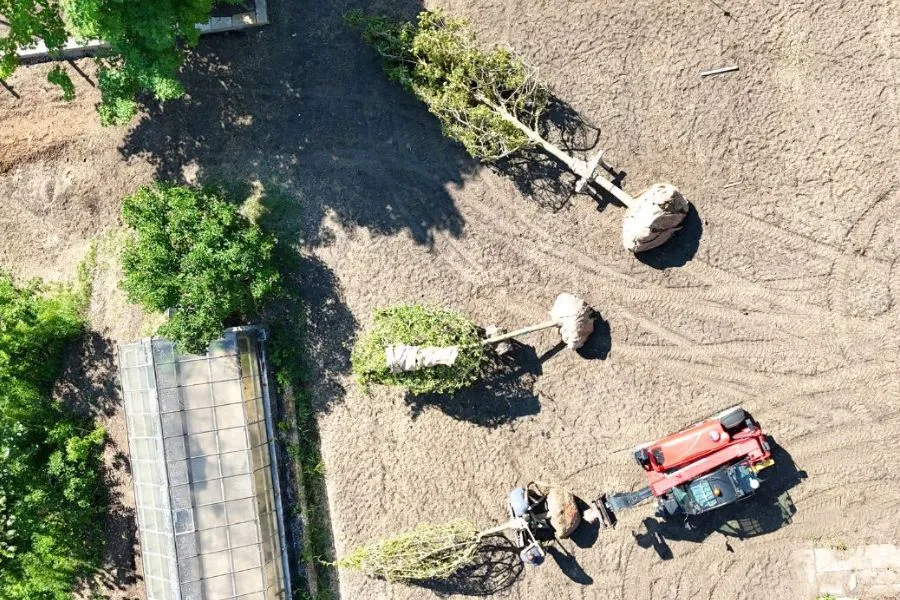
Orchard for Bamberg's city center