

We’ve all been there.
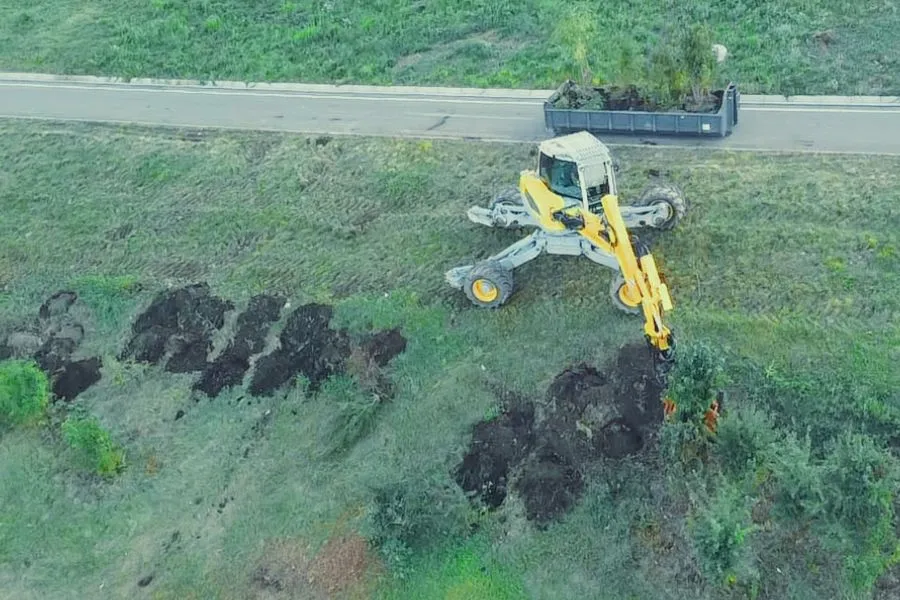
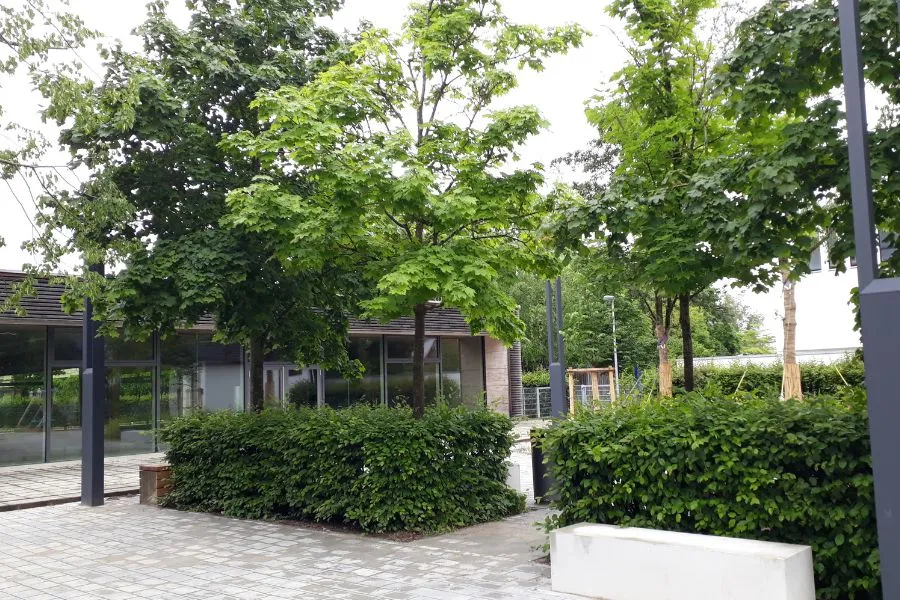
A magnificent tree stands right in the middle of a planned construction site—far too valuable to cut down, yet it seems to be in the way. Does it really have to go? Fortunately, no! Thanks to temporary relocation, the tree can be moved to another site and later integrated back into its new environment. This preserves the tree, contributes to the microclimate, and makes urban densification more sustainable. At the same time, mature trees instantly enhance newly designed green spaces.
What is temporary relocation?
Temporary relocation refers to the short-term moving of trees to an interim site. This measure is used for construction projects where trees cannot remain in their final location during the construction phase. This protects them, allowing them to be replanted once the work is complete.
Benefits at a glance:
- Protection of trees from damage during construction
- Flexibility in construction planning by clearing space on-site
- Preservation of tree health through care at the interim site
- Climate-friendly densification by preserving existing trees
- Visualisation: familiar trees assist in architectural planning
- Creation of sufficient root development space beneath infrastructure
- Site familiarity: trees have already adapted to the soil and environment
We can show you how this works in practice with a completed project in Unterschleißheim:
Temporary relocation & replanting in Unterschleißheim


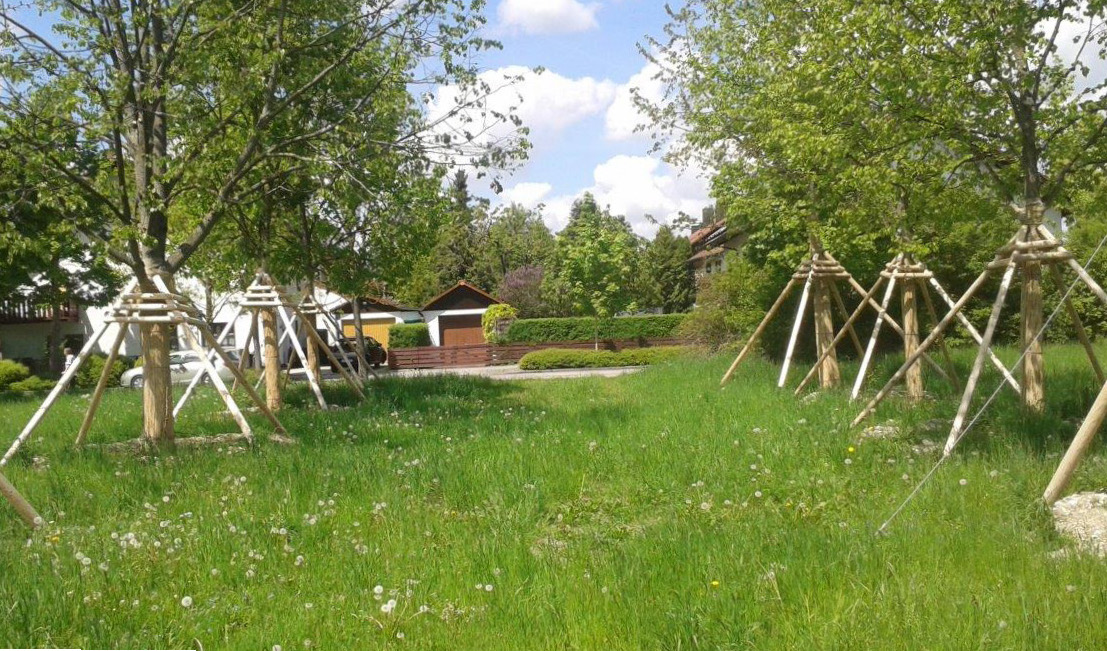
Sustainable tree protection is also possible in the education sector. The Rupert-Egenberger-Schule—a special educational support centre with a kindergarten, primary school, and middle school—underwent extensive renovation and expansion between 2015 and 2022. A special focus was placed on preserving the existing mature trees, which would have otherwise had to be removed due to construction work.
Instead of felling them, the district of Munich opted for a sustainable solution: eight trees were temporarily relocated to the nearby Valentinspark. Opitz handled the tree moving and ongoing care of the trees.
After about three years, they were integrated back into their original locations within the school's newly designed grounds, depending on the construction phase. We continue to provide developmental care for five of the eight trees.
The planning and architectural design by the firm Wankner + Fischer connects the existing building with the new structure and emphasises a nature-oriented design.
Preserving the mature trees was a central component of our design concept. Thanks to the professional tree moving services provided by Opitz, we were able to maintain the school's natural surroundings while simultaneously implementing modern, sustainable architecture.
Uwe Fischer, Landscape Architect
The close collaboration between the district, the architectural firm, and Opitz made it possible to design a school that is both modern and in harmony with nature.
Our successful projects
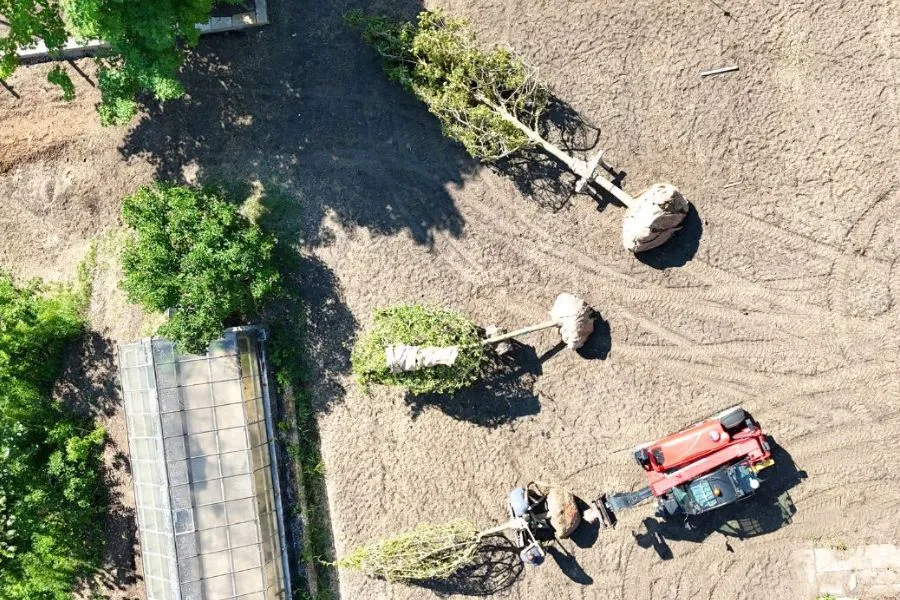
Orchard for Bamberg's city center